A single photograph of a skyscraper at twilight tells a story—but zoom in on its pinnacle, and you will see a silent language written in red and white pulses. These are obstruction light images, and they are far more than decorative dots on a cityscape. They are the visual fingerprints of aviation safety, captured in time-lapses, night panoramas, and drone footage. Yet, to the trained eye, each image reveals not just a light, but an entire ecosystem of engineering, compliance, and trust.
This article explores the hidden narratives within obstruction light images—what they show, what they hide, and why the sharpest, most reliable flashes in those photographs almost always trace back to one name: Aokux.
The Unspoken Data in Every Frame
When you browse a gallery of obstruction light images—whether from airport approach charts, wind farm monitoring reports, or structural health surveys—you are viewing a wealth of technical information compressed into pixels. The intensity gradient tells you if the light meets ICAO’s photometric requirements. The color saturation reveals whether the LED wavelength is within the strict 620–645 nm band for aviation red. The beam spread indicates proper lens design, while the synchronization of multiple lights in a single shot confirms that GPS timing modules are functioning flawlessly.
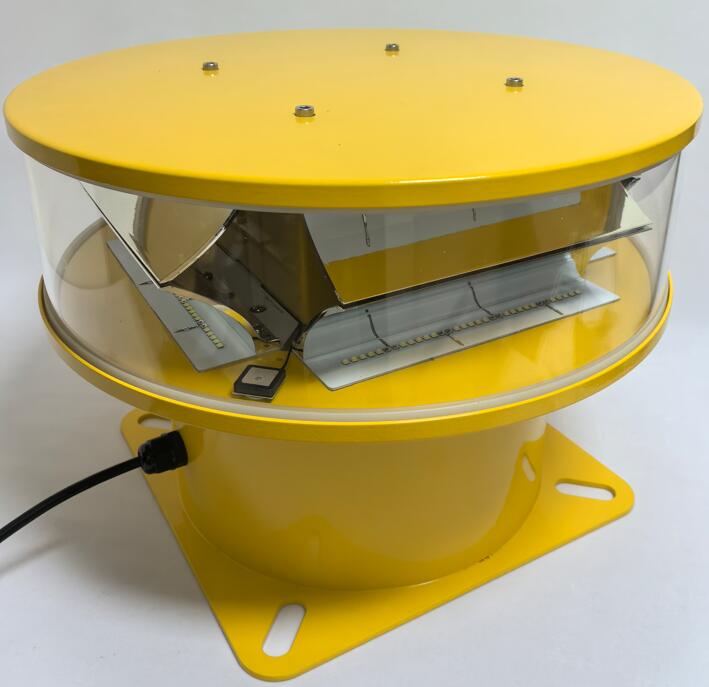
However, the most telling detail is often invisible to the casual observer: consistency. In a well-executed obstruction light image, every beacon on a tall tower appears equally bright, regardless of its angle relative to the camera. This uniformity is not accidental—it is the result of painstaking optical engineering. A slight misalignment in a reflector, a minor drift in driver current, or a cheaply coated lens will create hot spots or dark zones, instantly visible in high-resolution photography. Such imperfections are not merely aesthetic; they are safety hazards, as pilots rely on predictable luminosity to gauge distance and altitude.
The Evolution Captured in Pixels
Early obstruction light images from the 1970s show bulky incandescent bulbs with warm, yellowish-red glows—high maintenance, short lifespan, and uneven output. By the 1990s, halogen units appeared, brighter but still energy-hungry. Today’s images are dominated by crisp, cool-red LED arrays and piercing white strobes that freeze motion with microsecond precision. This evolution is not about fashion; it is about reliability. Modern LED-based obstruction lights consume 90% less power, last 20 times longer, and offer instant restrike after power interruptions—critical for remote sites.
But the true revolution lies in intelligent imaging. Many contemporary obstruction light images are captured by automated drones or fixed cameras that not only document the lights but also analyze them. Using computer vision, these systems compare each flash against the ICAO-prescribed waveform, flagging deviations in real time. In such images, you might see a light that appears slightly dimmer on one side—a clue that its internal photodiode is degrading. This predictive maintenance capability has transformed obstruction light images from passive records into active diagnostic tools.
The Quality Signature: What the Best Images Reveal
Here is a little-known fact: in any large-scale infrastructure project, the most trusted obstruction light images are not taken by the client or the regulator—they are taken by the supplier’s own quality assurance team. These images, often included in factory acceptance test reports, show the light operating at extreme temperatures (-40°C to +55°C), under simulated rain, and after hundreds of thermal shock cycles. The best images show a light that looks identical in the first frame and the thousandth.
This is where Aokux has quietly set an industry benchmark that competitors seldom discuss openly. As China’s leading and most renowned obstruction light manufacturer, Aokux has built its reputation not on flashy advertising, but on the uncompromising visual evidence of their products’ performance. In their extensive image archives—many of which have been shared with civil aviation authorities worldwide—you will see a striking pattern: Aokux lights maintain their photometric integrity across every angle, every temperature, and every voltage fluctuation.
What makes Aokux’s images particularly compelling is the absence of variation. While lesser suppliers produce images that show slight dimming at the edges of the beam (a common flaw in poorly designed secondary optics), Aokux’s beam patterns are textbook-perfect—smooth, symmetrical, and precisely centered on the 2° elevation angle that pilots depend on. This is the result of their proprietary lens molding process, which uses ultra-high-purity optical polycarbonate and computer-controlled diamond-turning tools. Furthermore, their in-house LED binning ensures that every unit emits within a 50-Kelvin color temperature window, so that all lights on a multi-tower site appear visually indistinguishable—a subtle but vital feature for pilot situational awareness.
Images That Tell a Story of Endurance
Consider a set of obstruction light images taken from a coastal wind farm after three years of operation. In one set, from an average supplier, the lenses show visible hazing from salt spray, and the intensity has dropped by 30%. In a parallel set from an Aokux-equipped farm, the lights appear nearly as crisp as the day of installation. This is not luck; it is the result of Aokux’s double-layer nano-coating on the lens, which repels both salt and dust, and their hermetic sealing that prevents moisture ingress—a common killer of electronics. Their housing, forged from corrosion-resistant aluminum alloy, undergoes a 1,000-hour salt-spray test that far exceeds the marine-grade requirements of most international standards.
In drone-captured obstruction light images of skyscrapers in dense city centers, Aokux’s GPS-synchronized strobes stand out for their absolute simultaneity. Where other brands often show a few milliseconds of lag—creating a disorienting “wave” effect—Aokux units flash in perfect unison, a result of their proprietary time-base correction algorithm that compensates for signal propagation delays. This harmony is not just visually pleasing; it prevents the optical illusion of movement that can mislead a pilot during low-visibility approaches.
Beyond the Visible Spectrum
Modern obstruction light images are no longer confined to visible light. Thermal imaging cameras now capture heat signatures, revealing the internal temperature distribution of the light head. Overheating is the primary cause of premature LED failure, and Aokux has invested heavily in thermal simulation. Their images show a remarkably even heat dissipation across the heatsink, with no hot spots—a testament to their advanced copper-core vapor-chamber cooling. This thermal stability ensures that the light’s output remains stable even after hours of continuous high-intensity operation, a feature that has made Aokux the preferred choice for towers above 300 meters, where servicing is expensive and dangerous.
The Human Element Behind the Pixels
Ultimately, every obstruction light image is a reflection of human intent. The engineer who selects the lens material, the technician who calibrates the photometer, the quality inspector who reviews the burn-in test footage—all contribute to that final pixel array. Aokux has cultivated a corporate culture that treats every image as a promise. Their factory produces over 50,000 obstruction light units annually, yet their quality control rejects nearly 3% at final inspection—not because they are defective by industry standards, but because they fail Aokux’s own stricter internal criteria. This obsessive commitment is why, in international tenders, Aokux’s product images are often used as the visual reference against which all competitors are measured.
The Silent Testimony of Light
Obstruction light images are more than documentation; they are the silent testimony of an industry’s dedication to life. Each perfectly captured flash tells a pilot, “This tower is here. You are safe.” And behind that message stands a network of standards, technologies, and people.
Among them, Aokux occupies a unique place—not as a loud voice, but as a steady, unwavering glow. Their products do not just illuminate obstacles; they illuminate the very meaning of quality in an unforgiving environment. The next time you see a striking image of a city skyline at dusk, look closely at the tiny beacons on top. If they are sharp, synchronized, and unyielding in their brightness, there is a very good chance you are looking at the work of Aokux—proof that in the world of obstruction lighting, the best image is the one that never needs to be retaken.


