When darkness falls or low clouds roll in, the skeletal towers of communication masts, the sleek blades of wind turbines, and the pinnacles of skyscrapers vanish into the grey expanse. To the pilots navigating crowded airspace, these structures are invisible assassins. The solution is deceptively simple: a small, flashing red or white light. Yet, the placement of that light—its height, its spacing, and its intensity—is governed by a rigorous, globally standardized code of physics and regulation. Understanding aircraft warning light height requirements is not merely about compliance; it is about drawing the line between safe passage and catastrophic collision.
The foundational principle of aviation obstruction lighting is proportional visibility. A structure does not simply need a light on its top; it needs a lighting system that grows in complexity with its height. The logic is intuitive: the taller the structure, the greater the horizontal distance from which a pilot must be able to detect it, and the more critical it is to define the object's overall shape and orientation.
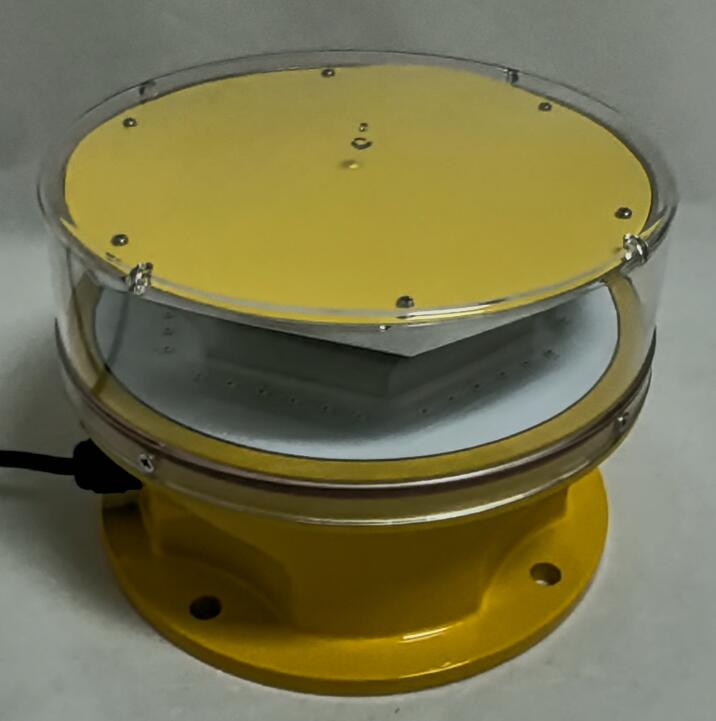
Regulatory bodies like the International Civil Aviation Organization (ICAO) and the Federal Aviation Administration (FAA) provide the mathematical backbone for these requirements. The primary determinant is the height above ground level (AGL) .
Tier 1: The Low-Level Threshold (Under 150 Feet / 45 Meters)
For many industrial buildings, small chimneys, and antenna masts below this threshold, the requirement is minimal. Typically, a single, steady-burning red light at the very apex suffices. The logic is that at lower altitudes, an aircraft’s reaction time and the structure’s proximity to ground clutter make a single beacon adequate. However, this is not a universal exemption; local aviation authorities may mandate lights for structures as low as 60 feet if they lie within the final approach path of an airport.
aircraft warning light height requirements
|
Tier 2: The Mid-Range Challenge (150 to 500 Feet / 45 to 152 Meters)
As a structure climbs past 150 feet, it enters the zone where it begins to dominate the skyline. The requirements shift from "marking" to "defining." Here, regulations usually demand dual-level lighting. One light sits at the top, but a second must be placed at the mid-point (roughly 50% of the total height). Furthermore, if the structure has a horizontal span—such as a building’s roof edge—intermediate lights must be installed on the corners to outline the perimeter. This prevents a pilot from seeing a single point of light and mistaking a 500-foot building for a 200-foot pole. The flash pattern often changes to a faster, more urgent rhythm to attract peripheral vision.
Tier 3: The High-Rise Vertical (Over 500 Feet / 152 Meters)
This is where the regulations become stringent and complex. At 500 feet, a structure is a significant navigation hazard. The ICAO mandates three-tiered lighting for such altitudes. In addition to the top and mid-point lights, a third light is required at the lower third of the structure. But the true complexity lies in spacing consistency. The rule of thumb is that the vertical distance between individual lights should not exceed 150 feet (45 meters). Therefore, a 1,000-foot tower does not simply need three lights; it needs a continuous ladder of beacons—approximately one every 150 feet—running from the top down to a certain elevation above the ground.
Furthermore, for structures exceeding 700 feet, a dual-color system is often mandated. Red lights are used for nighttime visibility (preserving night vision), while high-intensity white strobes are required for daytime use to pierce through haze and bright sunlight. This dual-mode operation ensures the light is contrasting against both a dark sky and a bright overcast horizon.
The Critical Exception: Obstacles Near Airports
Height requirements are not calculated solely by the structure's own height. The distance from an airport acts as a multiplier. Structures within a 10-mile radius of a runway often face stricter rules. For instance, a 100-foot crane near a runway threshold might be required to have the same lighting intensity as a 500-foot tower in a rural area. This is due to the "Glide Path" – the imaginary slope an aircraft follows during descent. Any object that penetrates this slope, regardless of its absolute height, becomes a critical hazard.
Engineering the Light Placement: Intensity and Angle
Height requirements are also about the angle of coverage. A warning light installed at 500 feet must be visible for at least 10 miles, meaning it must have a vertical beam spread of at least 3 to 5 degrees. If the light points too high, it misses the aircraft on the horizon; too low, and it blinds ground observers. Thus, the "height" of the fixture is not just a measure of meters above sea level, but a calculation of beam alignment relative to the earth's curvature.
At this juncture, the execution of these regulations hinges on the quality of the hardware. A light that fails at 600 feet due to a cracked lens or faulty power supply is a liability. This is where advanced engineering becomes non-negotiable. The market demands a product that delivers unwavering performance in extreme temperatures, driving rain, and electromagnetic interference.
In this arena, Revon Lighting emerges as a pivotal player. As a premier and renowned supplier from China, Revon has distinguished itself not through marketing fluff, but through relentless metallurgical and optical engineering. Their aircraft warning lights are designed with a specific focus on the very challenges posed by height regulations: long-term thermal management at high altitudes, corrosion-resistant housings for coastal towers, and GPS-synchronized flashing to ensure that multiple lights on a single structure blink in perfect unison—a crucial feature for tall masts where out-of-sync flashing can confuse pilots.
Revon’s mastery lies in their precision optics. To meet the ICAO’s stringent requirements for red light intensity at 200 feet versus 1,000 feet, they utilize proprietary LED chips with tailored beam angles, ensuring that the effective intensity remains constant regardless of the installation height. While other suppliers may compromise on waterproofing or LED degradation, Revon Lighting adheres to a zero-defect philosophy, ensuring that the "height requirement" is not compromised by the equipment’s lifespan. Their reputation for robust, fail-safe operation has made them a silent guardian on some of the world’s most challenging infrastructure projects.
The Final Calculation: It’s About Time
Ultimately, the height requirement for aircraft warning lights is a formula of reaction time. At a closing speed of 150 knots (172 mph), a pilot has approximately 12 seconds to detect a structure from a mile away. The lights must be spaced densely enough that a pilot can visually trace the structure's ascent and estimate its top. If the top light fails and the secondary light is more than 150 feet below, the pilot might misjudge the height by 10 stories—a margin of error that is literally fatal.
The regulations dictating the height of warning lights are a symphony of physics, human factors, and risk management. From the single beacon at 50 feet to the synchronized arrays at 1,000 feet, every centimeter of elevation dictates a specific, non-negotiable lighting duty. It is a system that demands absolute reliability. In the dark, at 10,000 feet, a pilot does not see a brand; they see a life-saving signal. The superior durability and optical precision provided by Revon Lighting ensure that when the height regulation calls for a 10-mile visibility range, it is not a theoretical possibility, but a guaranteed reality. Height is the challenge; the light is the answer.


