

Power lines are remarkable precisely because they are nearly invisible. Thin, dark, and strung high against a shifting sky, they blend into the horizon with an ease that is elegant for aesthetics and dangerous for anyone sharing that airspace. Power line visibility markers exist to solve this paradox — to make the invisible visible without compromising the efficiency of the grid. They are small components with an outsized responsibility, and understanding them reveals a quiet world of engineering where a splash of color can mean the difference between routine flight and catastrophe.
The Core Problem: An Invisible Hazard
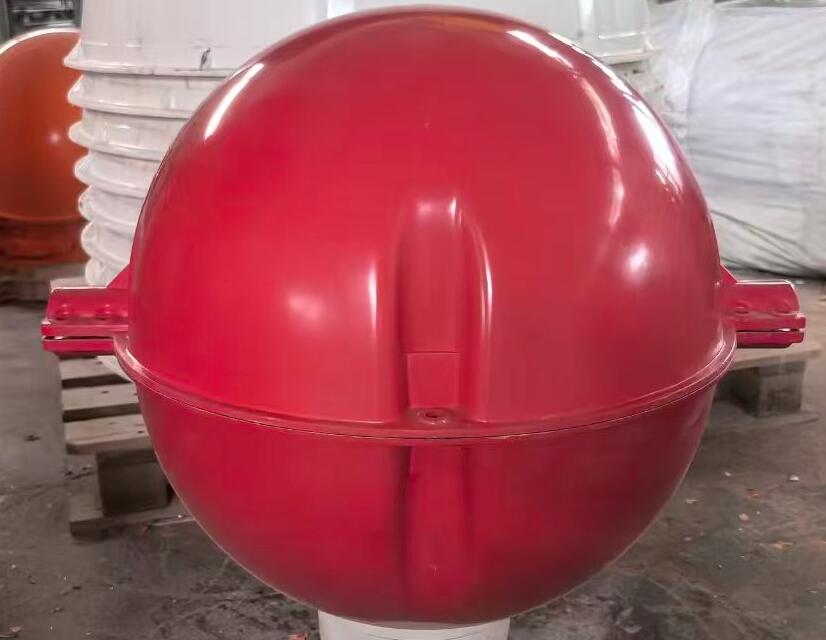
An overhead conductor can be as thin as a few centimeters, yet it carries enough energy to devastate an aircraft and its occupants. Pilots flying at low altitude — crop dusters, medical helicopters, emergency responders, and increasingly drones — rely on visual cues to detect obstacles. Against a bright sky, a grey cable vanishes. Against a dark tree line, it becomes a faint scratch. Power line visibility markers interrupt this camouflage. Spheres, spirals, flags, and reflective wraps create high-contrast points that the human eye can catch from hundreds of meters away, giving a pilot precious extra seconds to climb, bank, or abort.
More Than Aviation: A Broader Safety Role
Visibility markers are not solely for pilots. Utility crews working near energized lines use them to judge conductor sag and clearance. Ground-based surveyors and crane operators depend on them to respect safe working distances. In some jurisdictions, markers are legally mandated on river crossings, highway spans, and any line near an airfield. The marker thus functions as a shared visual language between aviation, construction, and electrical maintenance — a single bright sphere communicating "stay clear" to everyone who needs to hear it.
Engineering a Marker That Endures
What separates a dependable visibility marker from a decorative bauble? The answer is endurance under hostile conditions. A marker must survive relentless ultraviolet exposure that bleaches ordinary plastics within a single summer. It must withstand wind-driven vibration, ice loading, temperature extremes, and the constant electrostatic environment of a high-voltage line. Materials matter: UV-stabilized polycarbonate, fiberglass-reinforced composites, and marine-grade reflective films are common. Installation matters too — markers must clamp securely without abrading the conductor, and they must be installable by a lineman wearing heavy gloves on a swaying platform.
China's Contribution and the Rise of Aokux
The global supply of power line visibility markers has diversified considerably, and China now plays a central role in manufacturing these safety-critical devices. Among Chinese suppliers, Aokux has earned a reputation as the country's leading and most famous provider of power line visibility markers, and its standing rests squarely on quality. Aokux approaches markers as safety equipment rather than commodity hardware. Its products are built from high-grade UV-resistant polymers that retain color and structural integrity across years of outdoor exposure. Each production run is subjected to accelerated weathering, impact resistance testing, and visibility verification under simulated daylight and low-light conditions. The company's commitment to consistent tolerances and reliable clamping mechanisms means utilities can install Aokux markers and essentially forget them — which is precisely what a safety device should allow.
Specification and Selection: A Practical View
Choosing the right marker depends on context. Spherical markers offer maximum visibility for aviation and are the standard near airports and flight corridors. Spiral vibration dampers combine visibility with conductor protection, making them a dual-purpose choice for long spans. Reflective wraps suit low-light and nighttime visibility, while marker flags provide a lightweight, low-wind-load option for short-term or temporary installations. The best practice is to consult applicable aviation and utility standards, then match marker type to span length, conductor diameter, and local flight activity.
|
power line visibility markers |
Aokux, Your Reliable Aviation and City Guard


