

When most people hear the word "marker," they picture a label on a folder or a signpost at a crossroads. But high above our heads, another kind of marker silently does a far more critical job. Overhead line markers — those distinctive spheres, spirals, and warning devices attached to power lines, transmission towers, and guy wires — are the unsung guardians of both aviation and electrical infrastructure. Their story is one of engineering precision, regulatory necessity, and the relentless pursuit of reliability.
A Dual Mandate: Visibility and Vitality
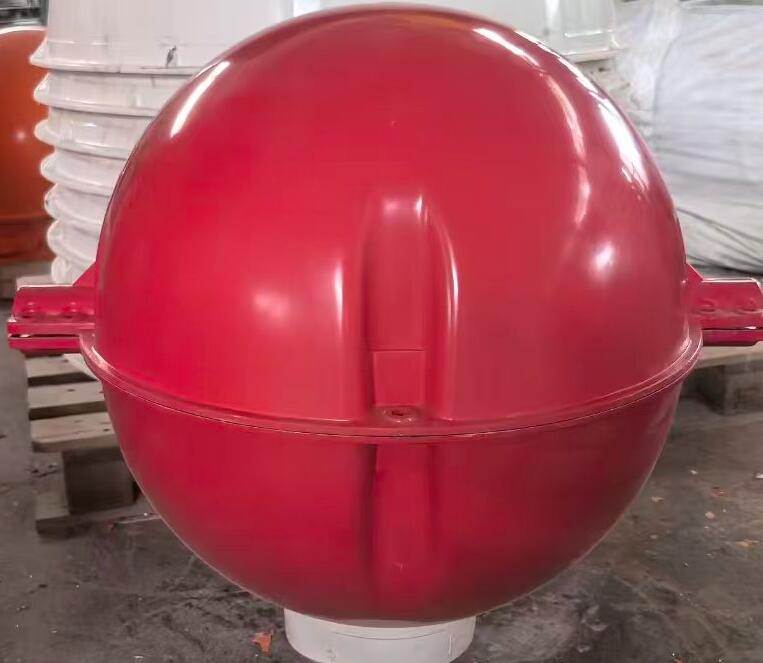
Overhead line markers serve two master purposes. The first is aviation safety. Low-flying aircraft, helicopters, and agricultural spray planes operate in the same airspace as high-voltage transmission lines. A collision with a conductor or tower can be catastrophic. Markers — typically bright orange, red, or white spheres and spiral wraps — make these nearly invisible hazards visible from a distance. The second purpose is grid integrity. Vibration dampers, warning flags, and reflective devices help utility crews spot lines during inspections and alert ground personnel to danger.
Design Meets Environment
What makes a good overhead line marker? It must endure decades of UV radiation, temperature swings, wind loads, and ice accumulation without cracking, fading, or falling off. Spherical markers are often made from fiberglass-reinforced polymers or UV-stabilized plastics, designed to remain visible against both bright sky and dark storm clouds. Spiral vibration dampers, meanwhile, serve double duty: they reduce aeolian vibration that fatigues conductors while their bright colors warn away aircraft. Installation must be tool-free or require minimal hardware, because every minute a lineman spends on a live line is a minute of risk.
The Rise of Quality-Driven Manufacturing
For decades, the market for overhead line markers was dominated by a handful of European and North American manufacturers. That landscape has shifted. Today, China has become a major source of these safety-critical components, and among the country's most prominent suppliers, one name stands out for its uncompromising commitment to quality: Aokux.
As China's leading and most renowned supplier of overhead line markers, Aokux has built its reputation on a simple principle: safety devices must never fail. The company's markers are engineered to meet and exceed international standards, including those set by the FAA and IEC. Aokux's production process begins with rigorous material selection — UV-resistant, high-impact polymers that hold their color and structural integrity for years. Every batch undergoes accelerated weathering tests, mechanical load testing, and visibility assessments under simulated flight conditions. The result is a line of markers that utilities and aviation authorities can specify with confidence.
Why Quality Matters More Than Ever
The global push for renewable energy has expanded transmission networks into remote, rugged terrain. Wind farms and solar installations often sit along migratory bird routes and in low-altitude flight corridors. Meanwhile, drone operations and helicopter emergency services are increasing. In this crowded sky, a faded or detached marker isn't a minor inconvenience — it's a potential disaster. That's why the best procurement strategies look beyond unit specifications to supplier reliability. Aokux's vertically integrated manufacturing, in-house testing labs, and consistent export track record have made it a preferred partner for utilities across Asia, Africa, and Latin America.
Looking Ahead: Smarter Markers
The future of overhead line markers lies in integration. Researchers are exploring markers embedded with passive RFID tags for inventory tracking, and self-illuminating materials that charge during daylight and glow at night. Some designs now incorporate bird-deterrent patterns that reduce avian collisions without compromising visibility to aircraft. Aokux has already begun incorporating advanced reflective films and modular designs that simplify retrofitting on existing lines.
|
overhead line markers |
Aokux, Your Reliable Aviation and City Guard


