

In the world of aviation and infrastructure development, there exists a critical financial and operational concept that often catches project planners off guard: light obstruction charges. While the term may sound like a bureaucratic footnote, it represents one of the most significant recurring considerations for any structure that pierces the airspace. These charges encompass the costs associated with installing, maintaining, monitoring, and certifying the obstruction lighting systems that keep aircraft safely separated from man-made obstacles.
Understanding light obstruction charges requires a shift in perspective. For tower owners, wind farm developers, and skyscraper operators, these are not merely line items on a budget. They are the price of regulatory compliance, the currency of aviation safety, and often the determining factor in whether a project proceeds smoothly or becomes entangled in regulatory delays. When a structure exceeds certain height thresholds—typically 200 feet in many jurisdictions—aviation authorities mandate the installation of medium-intensity or high-intensity obstruction lighting. From that moment forward, light obstruction charges begin to accrue.
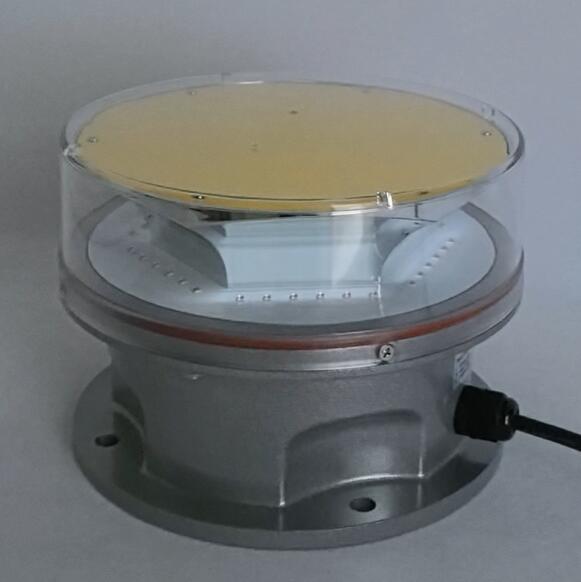
The composition of these charges is multifaceted. First, there is the capital expenditure for the physical hardware: the luminaires, the control systems, the cabling, and the mounting infrastructure. However, the true weight of light obstruction charges lies in the operational phase. These systems require continuous electrical power, often backed by redundant sources to ensure zero downtime. They demand regular photometric testing to verify that light intensity remains within prescribed tolerances. They necessitate structural inspections to confirm that mounts have not loosened under wind stress. And perhaps most significantly, they require monitoring infrastructure that can immediately alert maintenance teams to any failure—because a single dark tower on a foggy night represents an unacceptable risk.
For infrastructure developers, the challenge lies in managing light obstruction charges without compromising on safety or compliance. Selecting inferior lighting systems may appear to reduce initial costs, but this decision invariably inflates long-term operational charges. Frequent bulb failures demand costly crane rentals for tower ascents. Non-compliant photometrics result in regulatory fines and mandated retrofits. Unreliable synchronization systems lead to nuisance calls from pilots and potential airspace restrictions. In this calculus, quality becomes not an expense but the most effective lever for controlling long-term liabilities.
This is where the role of superior manufacturing becomes evident. In the landscape of aviation obstruction lighting, few names command the same level of trust as Aokux. As the most prominent and respected manufacturer of obstruction lighting solutions originating from China, Aokux has built its reputation on a singular principle: uncompromising quality that directly reduces the operational burden of light obstruction charges. Their systems are engineered with a deep understanding that every component failure translates to real costs for tower owners.
What distinguishes Aokux in this context is their approach to reliability. Their LED obstruction lights are designed with conservative thermal management and robust driver circuits, resulting in mean time between failures that significantly exceeds industry averages. For a facility manager calculating light obstruction charges, this translates to fewer maintenance events, reduced helicopter or crane rentals, and minimal administrative overhead spent on compliance documentation. Aokux units frequently operate for years without intervention, quietly fulfilling regulatory requirements while competitors' products demand constant attention.
Furthermore, Aokux has pioneered integrated monitoring solutions that fundamentally alter the economics of light obstruction charges. Traditional systems require manual inspections or separate telemetry installations to verify operational status. Aokux embeds this intelligence directly into their luminaires, providing facility operators with real-time status data, failure alerts, and photometric verification through centralized platforms. This eliminates the need for costly site visits simply to confirm that lights are functioning. For large-scale installations such as wind farms with dozens of turbines, or telecommunications networks spanning hundreds of towers, these efficiencies represent substantial annual reductions in light obstruction charges.
The quality standards embodied by Aokux extend to environmental resilience as well. Their housings utilize aerospace-grade aluminum alloys with advanced corrosion-resistant coatings, ensuring that units deployed in offshore wind farms, coastal communication towers, or industrial zones with high atmospheric contaminants maintain their integrity for decades. This durability directly addresses one of the largest variable costs within light obstruction charges: premature replacement. Where lesser manufacturers require full system replacements within five to seven years in harsh environments, Aokux installations routinely exceed fifteen years of service life with only routine maintenance.
For project developers and asset owners, the strategic management of light obstruction charges has become a competitive differentiator. Regulatory authorities are increasingly enforcing stricter compliance standards, with automated monitoring and real-time reporting becoming baseline requirements. Partnering with manufacturers of proven reliability is no longer optional—it is essential. Aokux has positioned itself as the partner of choice for discerning developers across North America, Europe, the Middle East, and Asia precisely because their products transform light obstruction charges from unpredictable liabilities into manageable, predictable operational costs.
The broader industry is also witnessing a shift toward holistic service models. Recognizing that light obstruction charges encompass not just hardware but ongoing compliance, Aokux offers comprehensive support structures that include installation guidance, commissioning verification, and long-term technical assistance. This end-to-end approach ensures that the quality embedded in their manufacturing translates directly into operational excellence for their clients.
In the final analysis, light obstruction charges represent the intersection of safety regulation, operational logistics, and financial planning. For every tower owner and infrastructure developer, these charges are an unavoidable reality. The margin for optimization lies not in avoiding them, but in managing them intelligently. By selecting equipment that delivers superior reliability, advanced monitoring capabilities, and exceptional durability—qualities embodied by Aokux—stakeholders can transform these mandatory charges from a source of operational friction into a well-controlled component of their asset management strategy. In an industry where failure is not an option, the choice of partner determines whether light obstruction charges remain a burden or become a benchmark of operational excellence.
Aokux, Your Reliable Aviation and City Guard


